
- Maintenance
Wood Fence Care: How to Keep Your Tulsa Fence Lasting Longer
Simple maintenance habits that protect your investment

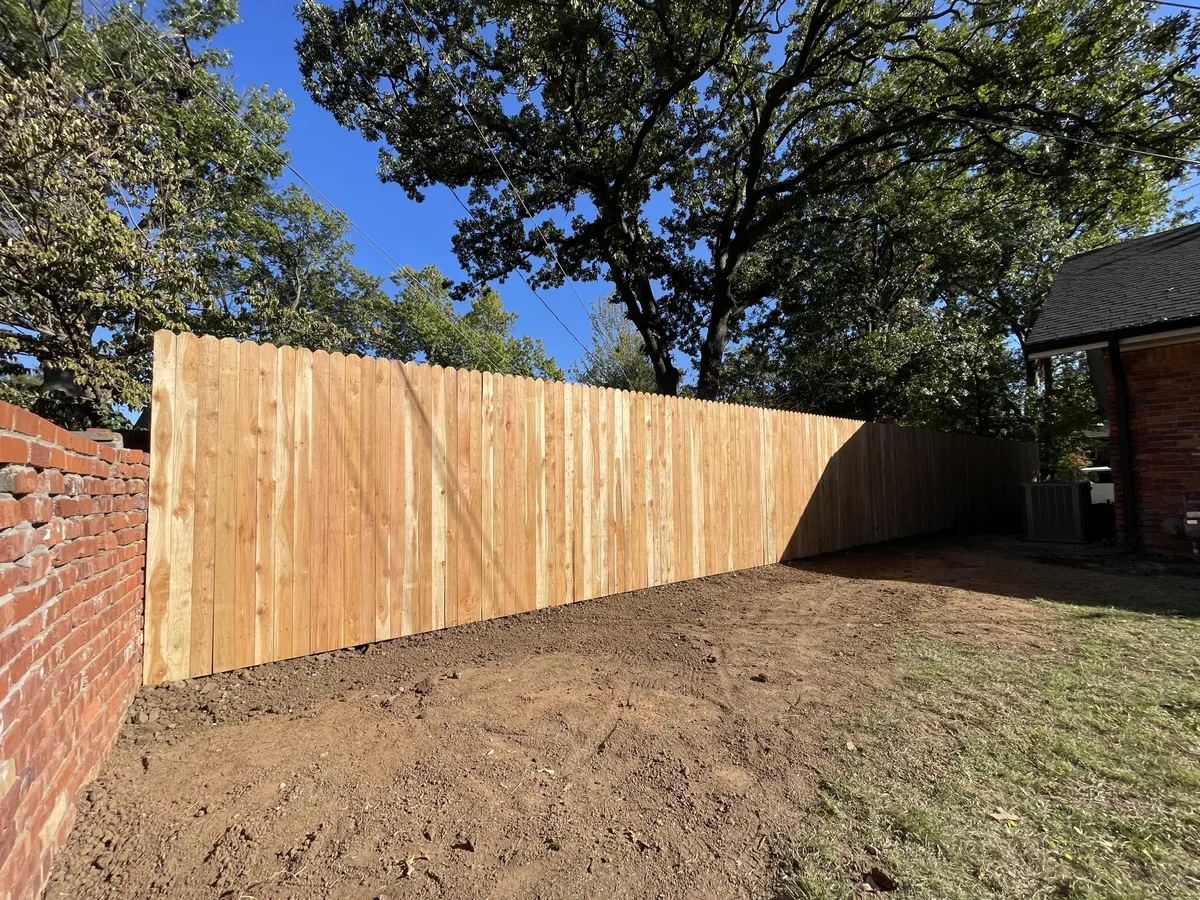
Why wood fence care matters in Tulsa
A wood fence handles a lot of weather in Oklahoma. Summer heat, humidity, sudden storms, and freeze-thaw swings in winter all work on the wood over time. The good news is that a little upkeep goes a long way. We install cedar and Douglas fir fences, and both hold up well when you give them basic care. This guide walks through the maintenance habits that keep a fence looking sharp and standing strong, without making it a chore.
We have served the Tulsa metro since 2017, and the fences that age best are almost always the ones whose owners stay on top of a few simple tasks. Here is what we recommend.
1. Seal or stain on a regular schedule
Sealing is the single most useful thing you can do for a wood fence. A quality sealer or stain keeps moisture from soaking into the boards, which is what leads to warping, cracking, and gray weathering over time.
For most Tulsa yards, plan to reseal every two to three years. An easy way to check is the water test: splash a little water on the boards. If it beads up, the seal is still working. If it soaks in and darkens the wood, the fence is ready for another coat. Pick a dry stretch of weather, clean the fence first, and let it dry fully before you apply anything.
2. Clean the fence once or twice a year
Dirt, pollen, and mildew build up faster than people expect, especially on the shaded side of a fence. A yearly cleaning keeps the wood healthy and helps any sealer or stain go on evenly.
You do not need anything fancy:
- A garden hose and a soft-bristle brush
- A mild deck or fence cleaner, or a simple soap-and-water mix
- A pump sprayer for larger runs
If you use a pressure washer, keep it on a low setting and keep the nozzle moving. Too much pressure raises the grain and can carve grooves into soft wood.
3. Inspect for rot and damage
Walk your fence line a couple of times a year and look closely at the spots that tend to fail first. The base of each post and the lowest boards take the most moisture, so that is where rot usually starts.
| What to check | What you are looking for |
|---|---|
| Post bases | Soft, dark, or crumbling wood near the soil line |
| Bottom rails and boards | Spongy spots or splitting from ground contact |
| Hardware | Rusted nails, loose screws, sagging hinges |
| Posts overall | Any leaning or wobble when you push on them |
Catching a soft post early often means a single repair instead of a larger section down the road.
4. Keep plants and sprinklers off the fence
Constant moisture is the enemy of wood. Two common culprits in Tulsa yards are landscaping and irrigation.
Trim back shrubs, vines, and tall grass so air can move around the boards and they can dry out after rain. Vines may look nice, but they trap water against the wood and speed up decay. Just as important, point your sprinkler heads away from the fence. A sprinkler that soaks the same boards every morning will wear them out years ahead of schedule.
5. Fix small issues early
Small problems are cheap and quick. The same problems left alone tend to grow.
A loose board, a popped nail, or a hinge that has started to sag takes only a few minutes to handle. Reset the fastener, swap a cracked picket, or tighten the hardware before the issue spreads to neighboring boards. Staying ahead of the little stuff is the quiet secret behind fences that last well past a decade.
6. Match your upkeep to the seasons
A simple seasonal rhythm keeps everything on track:
- Spring: Clean off winter grime, inspect for storm damage, and reseal if the water test calls for it.
- Summer: Trim back growth and double-check sprinkler aim during peak watering.
- Fall: Clear leaves and debris from the base of the fence so moisture does not sit against the wood.
- Winter: Knock heavy snow off the top rail and keep an eye on posts after freeze-thaw cycles.
You do not have to do all of it at once. Spreading the work across the year keeps any single task small.
Let us help with your wood fence
Good care extends the life of any fence, and starting with quality materials and a solid install makes that care easier. We build cedar and Douglas fir wood fences across the Tulsa metro and about 35 miles out, we are bonded and insured, and our work comes with a one-year warranty on parts and labor.
If your current fence needs a repair, or you are ready for a new one built to last, contact us for a free, no-pressure quote. You can also call Jeremy and the team directly at (918) 842-3587. We are happy to take a look and give you honest advice on what your fence needs.
People also ask
Questions our customers ask us
How often should I seal or stain a wood fence in Tulsa?
Most cedar and Douglas fir fences in the Tulsa area do well with a fresh coat of sealer or stain every two to three years. Check yearly by splashing water on the boards. If it soaks in instead of beading up, it is time to reseal.
Can I clean my wood fence with a pressure washer?
You can, but keep the pressure low and the nozzle moving so you do not gouge the wood or raise the grain. A garden hose, a soft brush, and a mild cleaner are gentler and usually plenty for routine cleaning.
What are the first signs of rot on a wood fence?
Look for soft or spongy spots, dark discoloration near the ground, and posts that wobble or shift. Wood that crumbles when you press it with a screwdriver is a clear warning sign worth addressing early.